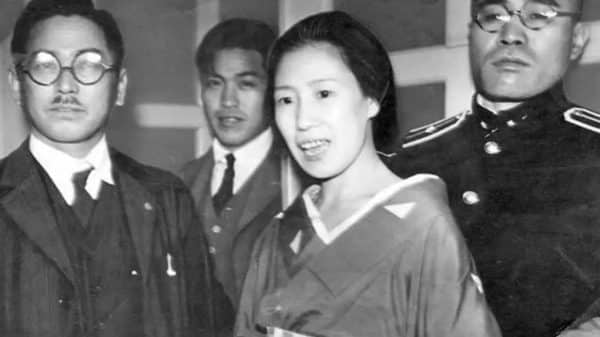
Key Highlights
- Explore the intriguing life of Sada Abe, a woman shrouded in mystery and scandal.
- Delve into Sada Abe’s transition from a respectable upbringing to a notorious figure in Tokyo’s sex industry.
- Uncover the tragic tale of Sada Abe’s fatal attraction to Kichizo Ishida and the shocking crime that ensued.
- Witness the sensational trial and the aftermath that captivated Japanese society.
- Discover Sada Abe’s lasting impact on popular culture through film, theatre, and literary adaptations.
Introduction
Sada Abe’s tale delves into the darker realms of passion and tragedy, captivating minds with its gripping narrative. Infamous for her involvement in a heinous crime that scandalized Japanese society, Sada Abe’s notoriety transcends mere infamy. Venturing beyond the ordinary, her story intricately weaves together elements of love, obsession, and a descent into madness. The enigmatic figure of Sada Abe continues to intrigue, inviting speculation and analysis into the complexities of human behavior and desire. A woman who etched her name in history through a shocking act that defied societal norms, Sada Abe remains a haunting presence in the annals of true crime.
The Life of Sada Abe
Sada Abe’s life was marked by a tumultuous journey through the realms of passion and crime. In her early years, she navigated a conservative family background before venturing into the vibrant yet often dark underbelly of Japanese society. Transitioning from the constraints of her upbringing to the allure of Tokyo, Sada Abe found herself entangled in a web of desires and choices that would later define her existence. Embracing the world of the geisha house and the intricate dance of pleasure and pain, her encounter with Kichizō Ishida proved to be a pivotal moment. This fateful meeting unleashed a chain of events that would culminate in a notorious crime, forever casting Sada Abe into the annals of history as a poison woman whose shocking acts would reverberate far beyond the confines of her own tangled emotions and her time spent in various brothels.
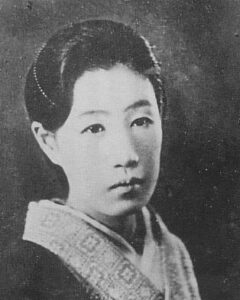
Early Years and Family Background
Born in Tokyo in 1905, Sada Abe’s early life was marked by turmoil and tragedy. Raised in a traditional household, she experienced early upheaval due to her father’s affair. This event deeply impacted Abe and shaped her perception of relationships and loyalty. The family’s subsequent move to a different area further disrupted her sense of stability. Struggling to find her place in a rapidly modernizing Japanese society, Abe’s upbringing instilled conflicting values of tradition and societal expectations. These formative years laid the foundation for her later actions and the infamous events that would catapult her into notoriety. As a response to this book, Abe wrote her own autobiography, Memoirs of Abe Sada, which provides insight into her early years and family background. Despite the challenges she faced in her youth, Abe’s resilience and inner turmoil would ultimately lead her down a path of infamy and tragedy.
Transition to Tokyo: From Respectability to Notoriety
Sada Abe’s move to Tokyo marked a pivotal shift in her life trajectory. Departing the confines of her quiet hometown, she entered a bustling city brimming with opportunities and temptations. Tokyo, a vibrant epicenter of Japanese society, offered a stark contrast to her humble beginnings. Initially finding work as a waitress, Sada’s immersion in the city’s nightlife gradually led her into the realm of the senses. Drawn into the shadows of the sex industry, she traversed a precarious path, straying from the norms of societal acceptance. Embracing a life far removed from her family’s tea house, Sada Abe’s gradual descent into prostitution and notoriety set the stage for the tragic events that would soon unfold, altering her fate irreversibly. Tokyo became the backdrop for Sada’s transformation from a woman of respectable origins to a figure synonymous with infamy.
The Infamous Relationship
The infamous relationship of Sada Abe and Kichizō Ishida was a tumultuous saga shrouded in passion and tragedy. Sada, a former geisha, crossed paths with Ishida, a married inn owner, igniting a whirlwind of forbidden love and reckless abandon. Their liaison unfolded within the clandestine realms of the sex industry, where Sada’s infatuation with Ishida spiraled into obsession. This liaison culminated in a shocking crime of passion that reverberated through Japanese society. The intensity of their bond, characterized by elements of control and submission, ultimately led to a fateful act that would immortalize Sada Abe as the “poison woman” and Ishida as the tragic victim of her desires. Their ill-fated entanglement transcended mere scandal, delving deep into the darkest recesses of human emotions and desires, all hidden beneath the layers of Sada’s kimono.
Meeting Kichizō Ishida: A Fatal Attraction
Sada Abe’s encounter with Kichizō Ishida marked the beginning of a tumultuous and tragic chapter in her life. Their meeting unfolded in the realm of the senses, with desires sparked and a fatal attraction kindled. Kichizō, a married man, was drawn to Sada’s enigmatic allure, leading to a forbidden relationship that would ultimately culminate in a shocking crime. Their liaison teetered on the edge of obsession, blurring the lines between affection and possession. The intensity of their bond transcended societal norms, plunging them into a web of passion and peril. The fatal attraction between Sada Abe and Kichizō Ishida would set off a chain of events that would reverberate through Japanese society, forever staining their names in infamy. On April 23, 1936, Sada Abe and Kichizo Ishida checked into a hotel in Tokyo. The plan was for a short liaison. Ishida, after all, had a wife to get back to. But the afternoon turned into night, then into the next morning. And for the next four days, Abe and Ishida stayed in bed engaged in frantic lovemaking.
The Dynamics of Love and Obsession
Sada Abe’s tumultuous relationship with Kichizō Ishida delved into the intricate realm of the senses, blending love with obsession in a way that captivated Japanese society. The intensity of their connection transcended mere physical attraction, steeped in a profound emotional entanglement that bordered on the surreal. From their initial encounter in the confines of a geisha house to the tragic climax marked by a violent end, the dynamics between Abe Sada and Kichizō Ishida defied conventional norms. Their liaison, fraught with elements of mutual dependency and possessiveness, unfolded like a dark tale of passion gone awry, echoing the fatal allure of their ill-fated bond
The Crime that Shocked Japan
Sada Abe’s heinous act that shook Japanese society involved a kitchen knife and her lover, Kichizō Ishida. Their intense and twisted bond culminated in a shocking crime – the murder of Ishida. The gruesome details of the murder, including the mutilation of Ishida’s body and the public display of his severed genitals, captured the nation’s attention. Abe’s panic after the crime led to her eventual surrender to the authorities the next morning. This unprecedented crime, which involved the removal of Ishida’s testicles, added a new sinister chapter to the already scandalous saga of Sada Abe. The depth of obsession and the lengths to which Abe went in this crime sent shockwaves through the realm of the senses, leaving a lasting mark on Japan’s history.
The Events Leading to the Murder
Sada’s obsession with Kichizō Ishida reached a boiling point, leading to the gruesome act that would forever cement her name in infamy. On the fateful night in May 1936, consumed by love and jealousy, Sada committed the heinous crime that shocked Japanese society. The events leading to the murder unfolded in a tragic dance of desire and obsession. As emotions ran high, Sada made a drastic decision that would alter the course of her life and reputation. The realm of the senses blurred with rage and longing as Sada’s actions spiraled out of control, culminating in a violent confrontation that would stain her legacy forever. The intricate web of passion and turmoil ultimately led to a tragic end, forever linking her name to a scandal that transcended the boundaries of conventional morality.
The Aftermath and Sada Abe’s Surrender
Sada Abe’s surrender after the gruesome crime sent shockwaves through Japanese society. Following the murder of Kichizō Ishida, Sada’s act of public display with his severed genitals epitomized the realm of the senses taken to an extreme. The aftermath of this macabre incident left an indelible mark on the nation’s psyche. Sada’s surrender not only exposed the dark underbelly of the sex industry but also highlighted the depths of obsession and desperation.
The repercussions of her actions extended beyond the confines of the geisha house, thrusting her into the spotlight of notoriety. Sada Abe’s surrender marked the beginning of a new chapter, one filled with legal proceedings, public scrutiny, and societal condemnation. Despite the gravity of her crime, Sada’s surrender revealed a complex individual entangled in a web of love, obsession, and tragedy.
The Trial and Its Aftermath
Sada Abe’s trial became a sensation in Japanese society, captivating the public with its lurid details. The courtroom drama unfolded with revelations of Abe’s intimate encounters and the shocking nature of the crime. The legal proceedings exposed the complex web of emotions that led to the gruesome act, shedding light on the darker aspects of human nature. The aftermath of the trial left a lasting imprint on the collective consciousness, sparking debates about morality and desire in a rapidly changing society. Sada Abe’s life post-trial took a downward spiral, marked by struggles to reintegrate into a society that shunned her. Despite the passage of time, the legacy of Sada Abe continues to intrigue and fascinate those who delve into the enigmatic realm of her story.

Legal Proceedings and Public Reaction
Legal proceedings following Sada Abe’s crime captivated Japanese society. The courtroom spectacle unfolded, shedding light on the murky realm of the senses and societal taboos. Abe’s case, marked by the gruesome act involving a kitchen knife, mesmerized the public. The unprecedented nature of the crime, a poison woman’s deed unmasked, generated public intrigue and horror. The trial’s sensational details, especially the mutilation of Kichizō Ishida’s body, shocked even the most seasoned observers. The public’s reaction swung between morbid fascination, scandalized whispers, and genuine fear for their safety. Abe’s trial became a spectacle, scrutinized by a nation grappling with the collision of tradition and modernity, desire and restraint. The legal proceedings served as a mirror reflecting deeper societal issues and anxieties, positioning Abe’s actions within a broader cultural landscape.
Sentencing and Sada Abe’s Life Post-Trial
Despite the media frenzy surrounding her trial, Sada Abe remained enigmatic as ever. The court’s verdict of six years in prison for her crime shocked many in Japanese society. After her release in 1945, Abe chose to keep a low profile, distancing herself from the notorious events. She delved into the realm of the senses by opening a small family business, a modest tea house in Osaka, far from the bustling streets of Tokyo where her notoriety began. Abe’s life post-trial was a stark contrast to her previous involvement in the sex industry. She faded into obscurity, far removed from the scandalous affair that once consumed her existence.
Sada Abe in Popular Culture
Sada Abe’s notorious case deeply resonated in popular culture, inspiring various literary and cinematic adaptations. Her story of obsession and violence has captivated audiences worldwide, portraying the complexities of human relationships and the dark realms of the psyche. From novels to films, Sada Abe’s life has been interpreted in different artistic forms, shedding light on the enigmatic nature of her character. The shocking events surrounding her involvement in the crime and the subsequent media frenzy have created a lasting impact on how the public perceives her. Through these creative expressions, Sada Abe’s legacy continues to evoke curiosity and fascination, immortalizing her as a symbol of scandal and tragedy in the annals of history.
Literary Adaptations and Inspirations
Some of the most notable literary adaptations and inspirations stemming from Sada Abe’s infamous story include novels, plays, and films that delve into the intricate web of her life and the shocking crime she committed. Writers and filmmakers have been captivated by the dark allure of Sada’s case, exploring themes of love, obsession, and societal taboos. These creative works often depict the psychological complexities of Sada Abe and the enigmatic nature of her relationship with Kichizō Ishida, captivating audiences with a narrative that blurs the lines between passion and tragedy. Through these adaptations, Sada Abe’s story continues to intrigue and fascinate audiences across the globe, offering a glimpse into a world where desire and destruction collide.
Film and Theatre Representations
Sada Abe’s sensational story has captured the imagination of filmmakers and playwrights alike, with various adaptations depicting her tumultuous life. In the realm of film and theatre, Sada Abe is often portrayed as the “poison woman” whose fatal attraction to Kichizō Ishida led to a grotesque end. Directors and writers have explored the depths of her obsession and the shocking crime that ensued, bringing to light the darker aspects of Japanese society in the early 20th century. These representations delve into the complexities of Sada’s psyche and the societal factors that influenced her actions, providing a nuanced look at a woman who shocked the nation with her scandalous deeds. From intimate dramas to bold retellings, Sada Abe’s legacy continues to captivate audiences worldwide, offering a glimpse into a story that transcends mere tabloid sensationalism and the infamous “Sada Abe panic” that swept the country.
Conclusion
Sada Abe’s life, marked by passion, obsession, and tragedy, remains a captivating tale that continues to intrigue people worldwide. Her story transcends mere crime and ventures into the realm of the senses, exploring the depths of human emotions and desires. The case of Sada Abe sheds light on the complexities of Japanese society during that era, delving into the darker aspects of the sex industry and unconventional relationships. Despite the heinous act that shocked Japan, Sada Abe’s life post-trial took on a low profile, away from the public display that once engulfed her. Through literary adaptations, films, and theatre representations, her legacy endures, immortalizing the enigmatic “poison woman” in the annals of history. Sada Abe’s tale serves as a poignant reminder of the thin line separating love from obsession and the devastating consequences that can arise from blurred boundaries.
Frequently Asked Questions
Why is Sada Abe still relevant in Japanese culture?
Sada Abe remains relevant in Japanese culture due to the enduring fascination with her infamous crime of passion, sparking literary adaptations, films, and theatre representations. Her story continues to captivate audiences, delving into the complexities of love, obsession, and the darker aspects of human nature.
How did Sada Abe’s actions impact women’s rights in Japan?
Sada Abe’s actions challenged societal norms, sparking discussions on women’s autonomy in Japan. Her case highlighted the need for gender equality and raised awareness about issues like domestic abuse.
What psychological theories have been proposed to explain Abe’s behavior?
Various psychological theories, such as attachment theory and borderline personality disorder, have been proposed to explain Sada Abe’s behavior. These theories delve into her upbringing, relationships, and mental state to unravel the complexities of her actions.